Camping in Extreme Weather: Insulation Tips for Your Trailer
Stay warm (and cool) in sub-zero nights or scorching days — real-world hacks for off-road trailers • February 2026
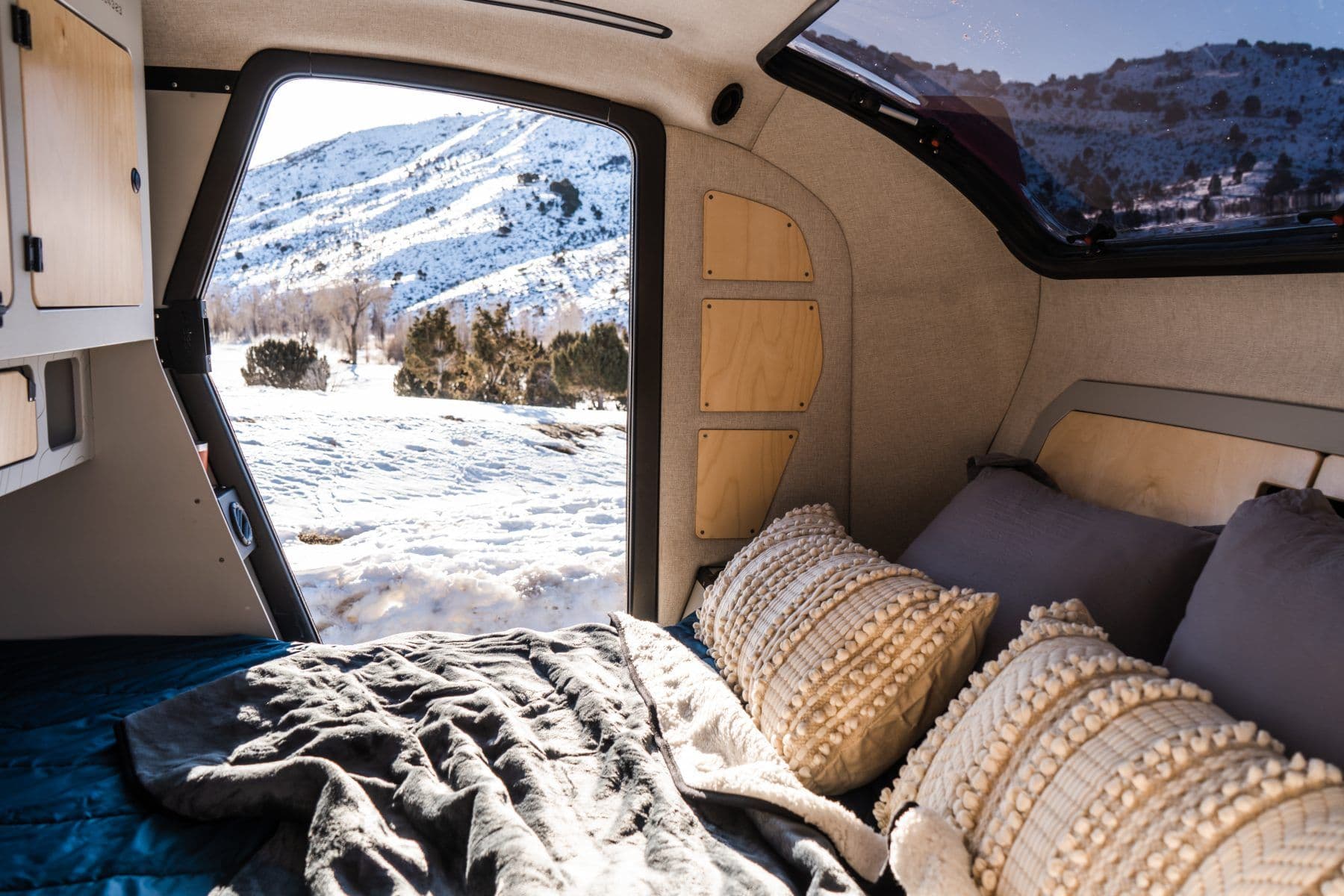
Warm, dry interior in freezing conditions — proper insulation turns a trailer into a four-season haven. (Escapod trailer example)
Extreme weather camping isn't about toughing it out — it's about smart engineering so you sleep comfortably instead of shivering or sweating. Whether facing -20°F Rocky Mountain nights, 100°F+ desert days, or high winds with blowing snow, insulation is your first line of defense. These tips focus on off-road trailers (teardrops, rooftop, flat-deck, expedition boxes) where space and weight matter. We've pulled from real overlanders who winter camp regularly.
1. Understand Heat Loss & Gain — The Big Three
Heat escapes (or enters) primarily through:
- Conduction (walls, floor, roof, windows)
- Convection (air leaks around doors, vents, seams)
- Radiation (sun baking the roof or cold radiating off metal walls)
Priority order: seal air leaks first → insulate floor/walls/roof → add reflective barriers → manage interior humidity/condensation.
2. Floor Insulation — Don't Sleep on This
Cold floors steal more heat than you think — especially on snow or frozen ground.
- Use 1–2" rigid XPS foam boards (pink/blue board, R-5 to R-10) cut to fit between frame rails; tape seams with foil tape.
- Layer Reflectix (bubble + foil) on top for radiant barrier, then add closed-cell foam mats or wool rugs for comfort.
- For extreme cold: build a simple "skirt" with foam board panels around the base — blocks wind and traps heat underneath.
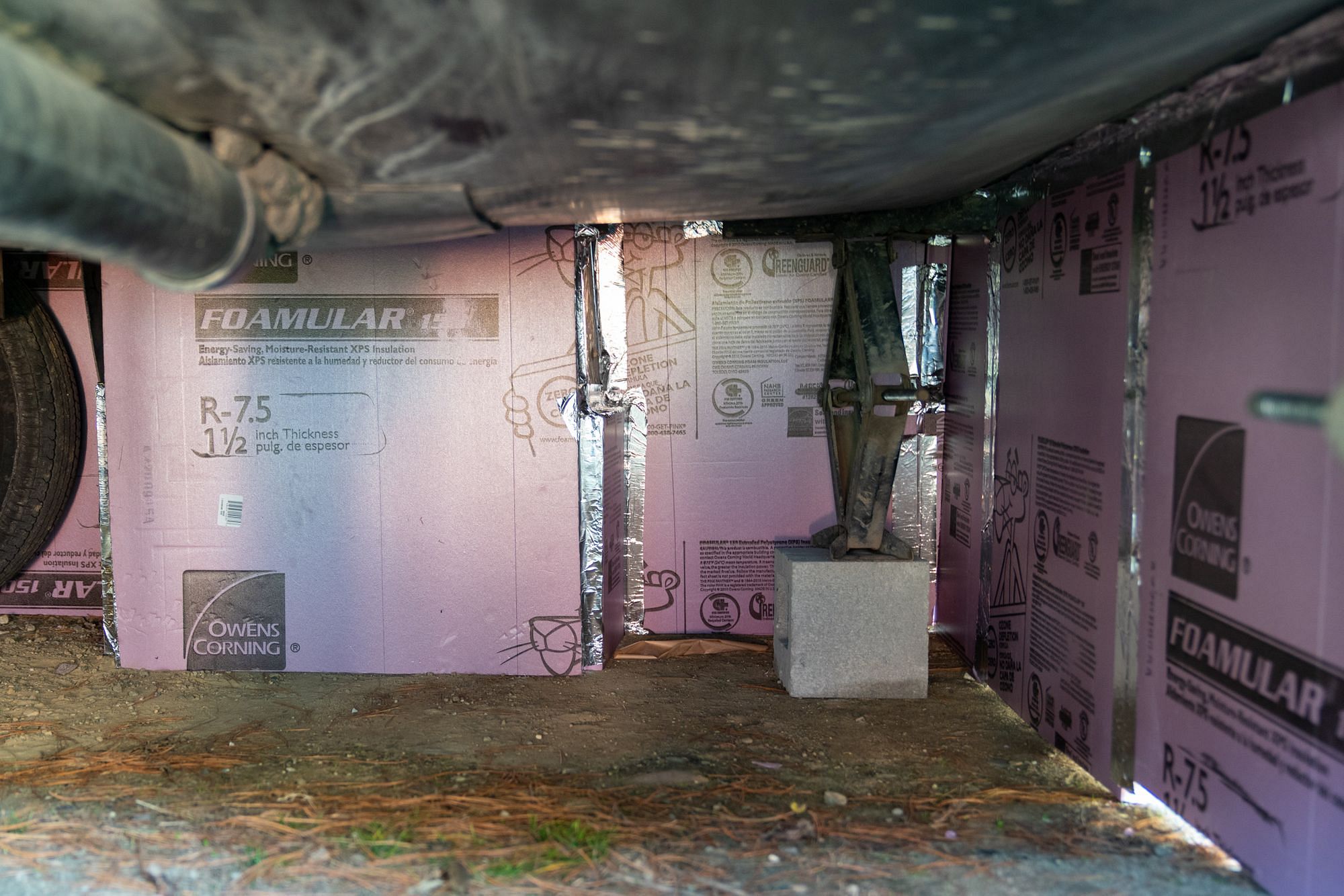
DIY foam board skirting with foil tape seals the undercarriage — huge difference in floor temp on sub-zero nights.
3. Walls & Roof — Layer Like an Onion
Most trailers have thin aluminum/composite skins — add layers without killing weight.
- Interior: 1/2"–1" polyiso or XPS panels glued or velcroed to walls/roof; cover with thin plywood, fabric, or Reflectix for aesthetics.
- Reflective barriers: Reflectix or similar foil bubble wrap — staple or tape to studs; reflects 97% radiant heat.
- Windows/doors: Thermal curtains (Reflectix cut to size + magnets) or cellular shades; double up for nights below 0°F.
- Roof: Add a second layer of white reflective coating or install a vent fan with insulated cover to prevent heat buildup in summer.

Reflective foil rolls are lightweight and effective for wrapping walls, roof, and even pop-out sections.
4. Skirting & Underbody Protection
Wind under the trailer turns it into a giant heat sink.
- Build removable skirting panels from 1–2" foam board + foil tape; attach with bungees, magnets, or velcro strips.
- Insulate exposed tanks/pipes with foam pipe sleeves + heat tape (low-draw 12V versions).
- In deep snow: pile snow around the base (like an igloo) — it actually insulates if done right.
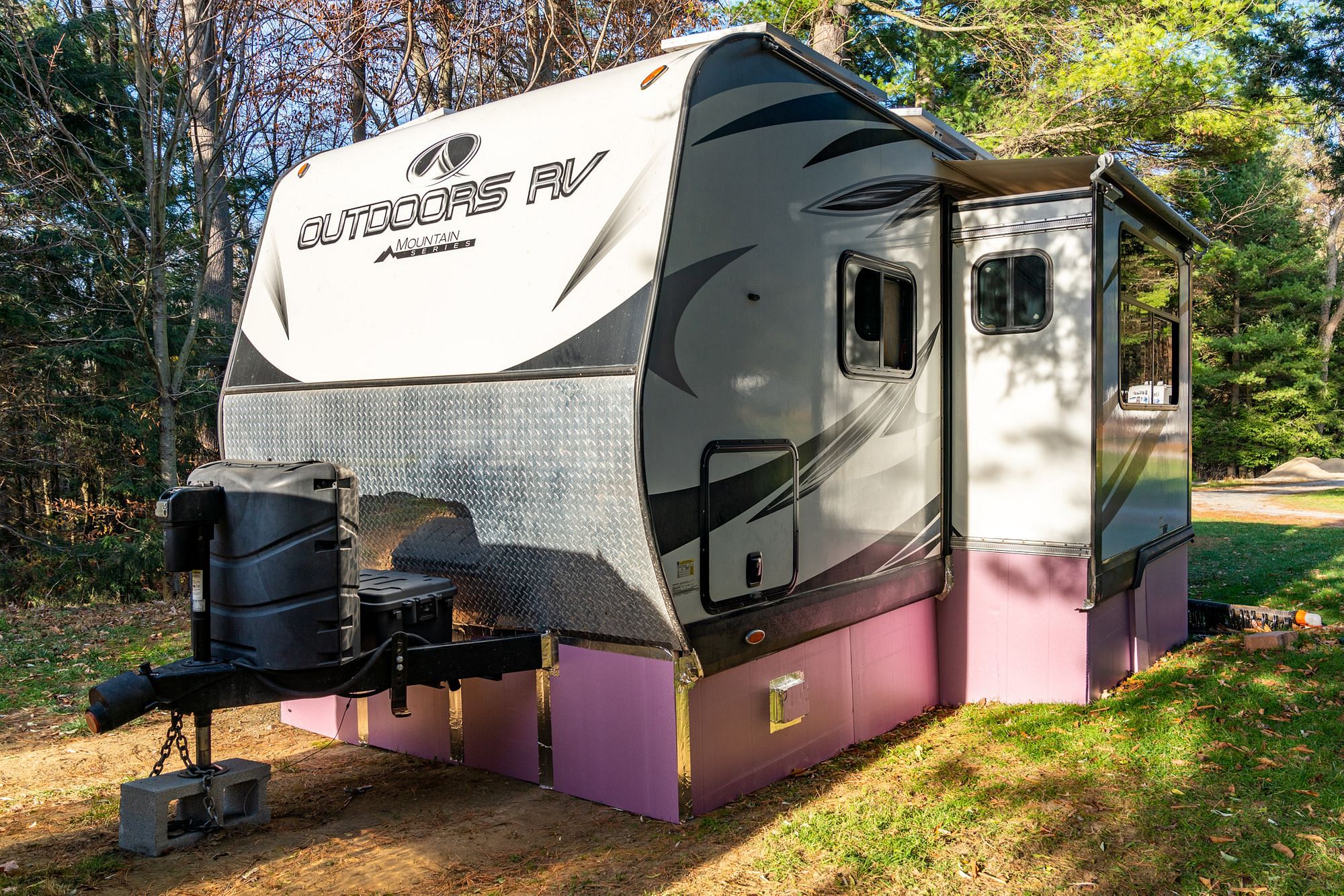
Complete skirting setup blocks wind and traps heat — essential for prolonged cold-weather stays.
5. Condensation & Ventilation — The Silent Killer
Breath + cooking = moisture → condensation → mold or frozen walls.
- Run a low-speed 12V vent fan constantly (roof MaxxAir or similar) to exhaust moist air.
- Use a dehumidifier bucket (DampRid or silica gel packs) or small electric dehumidifier if you have power.
- Insulate interior surfaces to keep them above dew point; add vapor barrier on warm side if rebuilding walls.
- Sleep with a small window cracked + fan on low — better than waking up to iced windows.
“The best insulation is worthless if condensation soaks everything. Ventilation + low humidity = dry, warm trailer even at -15°F.” — Winter overlander with 3 seasons in the Sierras.
Layered bedding + wall insulation keeps the sleeping area toasty while outside temps plummet.
6. Quick Summer Extreme Heat Countermeasures
Insulation works both ways:
- Reflective roof coating or silver tarps over the trailer during the day.
- Max ventilation + shade awnings; park with roof vent pulling hot air out.
- Insulated window covers (Reflectix outside-facing) to block solar gain.
Final Checklist Before Extreme Trips
- All seams taped/sealed?
- Floor and skirting protected?
- Vent fan operational + backup power?
- Condensation plan (fans, absorbers)?
- Extra blankets, hot water bottles, or small propane heater with CO detector?
With these upgrades, your trailer can handle -20°F to 110°F comfortably — turning "extreme" into just another adventure.


评论
发表评论